
Camp is the end-of-year exam — only nobody calls it that. It is the one place where everything you learned on Saturdays suddenly becomes necessary.
A day, hour by hour
The times shift a little from one camp to the next. The order almost never does.
- 7 a.m. · Reveille The whistle goes. Anyone who went to bed in wet socks finds out now. Wash at the spring, air the sleeping bags, pack up the inner tent.
- 7:30 a.m. · The flag ceremony (alzabandiera) The camp forms up in a square around the mast you raised yourselves. The flag goes up, there is singing, the motto of the day is read out. From here on the day has officially begun.
- 8 a.m. · Breakfast Each patrol eats at its own table, from whatever its own cook has made. Then the washing-up — with water heated on the fire, not from a tap.
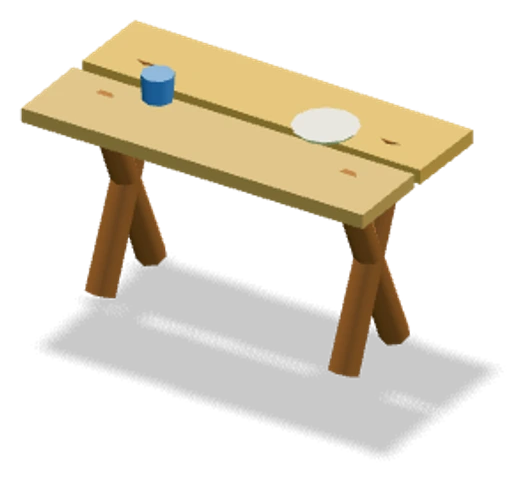
- 9 a.m. · Patrol work The hard part, and the best loved. You finish putting up the camp kitchen, the stone hearth, the table and benches made of lashed poles, the patrol gate. All of it wood, rope and knots — not a single nail.
- 11 a.m. · A moment of faith Short, outdoors. On Sundays, the full Mass — at Stâna de Vale it was held at an altar decked with flowers, built by the scouts out of dry wood.
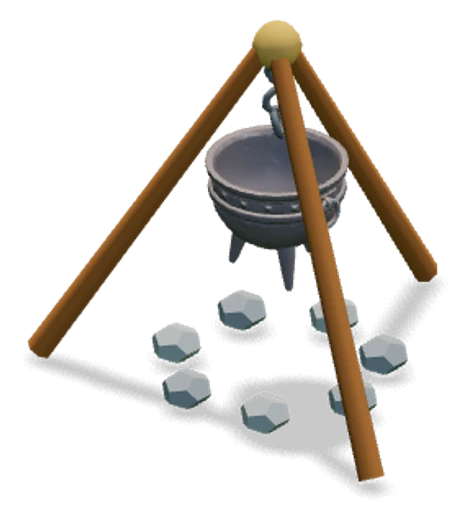
- 1 p.m. · Lunch Soup in the cauldron, over the fire. Anyone who chopped wood that morning eats it differently from anyone who did not.
- 2 p.m. · Rest An hour of compulsory quiet. Diaries get written, things get mended, people sleep on their backs in the grass.
- 3 p.m. · Workshops Knots and lashings, map and compass, trail signs, first aid, whittling, watching the wildlife. Everyone with their own group.
- 5 p.m. · The big game The whole camp, a few hours, one single game: a trail, a chase, capturing a flag, a mission in code. This is where you see which patrol really works as a patrol.
- 7:30 p.m. · Supper and the good turn Before it gets dark, everyone does their own small, unpaid service — and, once a day, the whole camp leaves the place cleaner than it found it.
- 8:30 p.m. · The campfire The big circle. Songs, sketches, jokes at the leaders' expense, the closing story told by one of the older ones. The fire dies down slowly and the voices drop with it.
- 10 p.m. · Evening prayer and lights out A minute of silence under the open sky. Then the tents, and that particular quiet that only people who have slept in a forest know.
Where we go up
Our camps have been in two places that are nothing like each other.
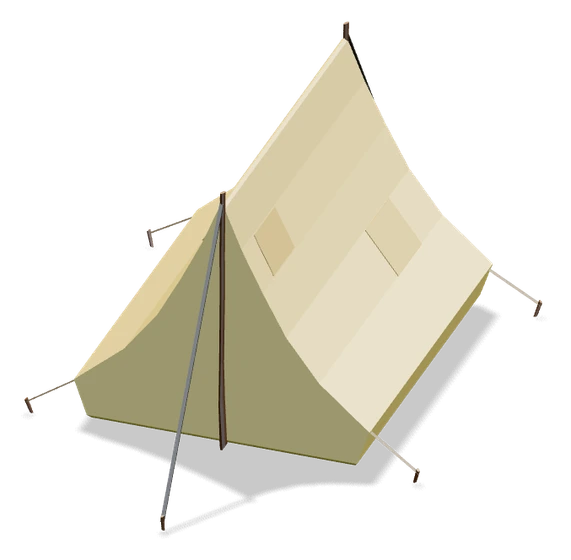
Stâna de Vale · summer
At 1,102 m, in a mountain bowl in the Vlădeasa massif, some 70 km from Oradea, ringed by fir and spruce. Here, in 2011, fifty children spent a week under canvas, in five patrols that cooked every meal themselves. Seven scouts from Adjudeni joined them, and nine from the Clan-Foc at Oderzo, in Italy.
Two things to know before you pack. First: the place has a famous spring, Izvorul Minunilor, and the whole settlement grew up around it. Second, and more important for you: Stâna de Vale is the rainiest place in Romania — around 1,630 mm a year. Bring the rain cape.
Arieșeni · winter
In January 2014, the Reparto, the Novitiate, the Clan-Foc and Co.Ca. (the leaders' community) went up into Țara Moților, to the school's mountain cabin — and chose the place for a very simple reason: there was no snow in Oradea, and there was snow there. Sledging, games in the drifts, a walk out to Groapa Ruginoasa, the crater of red ochre, sketches and songs in the evening, Mass with Fr. Fecheta. The theme of the camp: "unity in diversity".
Above the village rises Curcubăta Mare, 1,849 m — the highest peak in the Apuseni. Nearby: the Scărișoara ice cave and the Pătrăhăițești waterfall.
What goes in your rucksack
The golden rule: you carry it, on your back, on foot. So weigh it.
| Category | What everyone brings |
|---|---|
| Sleeping | Sleeping bag (check the temperature rating!), a foam mat or a thin mattress, one pair of dry socks kept only for the night. |
| Clothes | Boots already broken in — never new ones. A rain cape. A thick jumper even in August: at 1,100 m the nights are cold. A change of clothes for each day, with a separate bag for the wet ones. |
| Eating | Mess tin, mug, cutlery, a dishcloth. A water bottle of at least a litre. |
| Tools | Head torch with spare batteries, a pocket knife (if you are old enough to be allowed one), two or three metres of thin cord — you will see why. |
| Washing | A quick-drying towel, biodegradable soap, toothbrush, sun cream, insect spray. |
| The rest | Uniform and neckerchief, notebook and a pen, a spare supply of good humour for the day it rains without stopping. No phone — or a phone switched off, according to the camp rule. |
What you do not pack: expensive clothes, town shoes, hidden sweets (they bring animals into the tent), and anything you would be sorry about if it broke. Camp is a place where things get wet, get burnt and get lost.
The evening fire
If there is one thing you still remember in twenty years, it is this one.
As evening falls, the camp gathers in a circle. There is singing — loud and cheerful at first, then quieter and quieter as the fire dies down. Between the songs, each patrol performs a sketch it has been rehearsing in secret all day, usually at the leaders' expense, and the leaders have to take it with dignity.
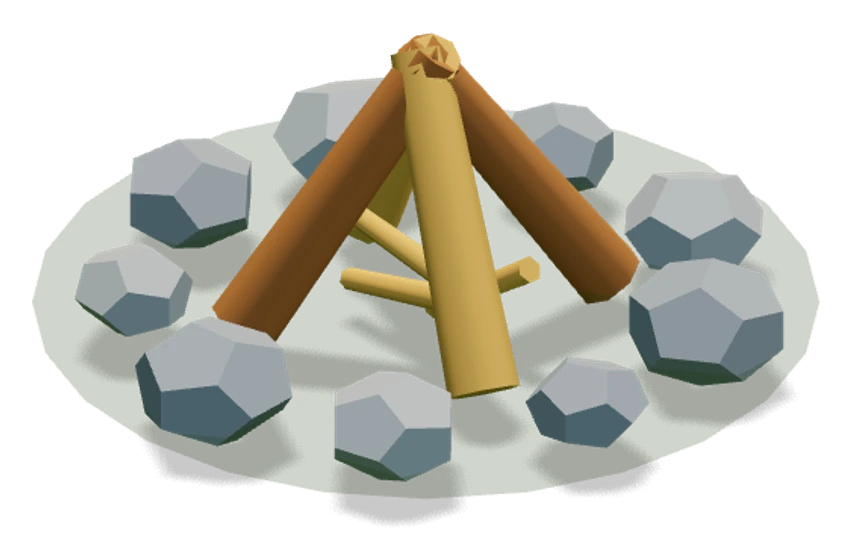

At the end it goes quiet and one of the older ones tells the goodnight story. Nobody sings after it. Everyone walks off to their own tent with eyes used to the dark and, for a few minutes, nobody speaks.
"They smile and sing even when things are hard."
Article 8 of the Scout LawWater, the lake and the summer side of camp
Camp is not all work.
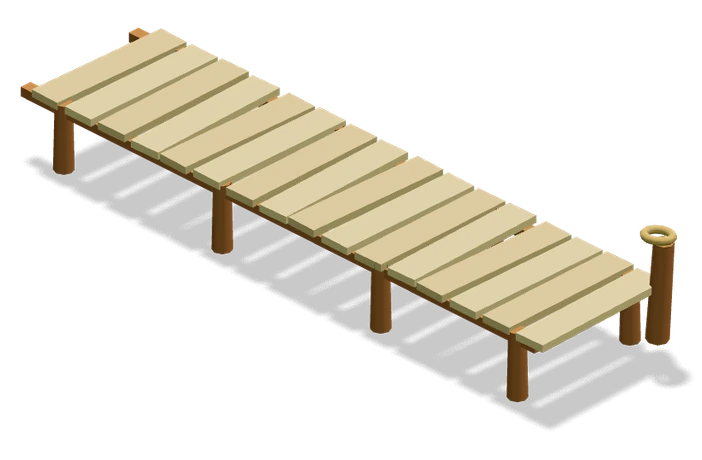
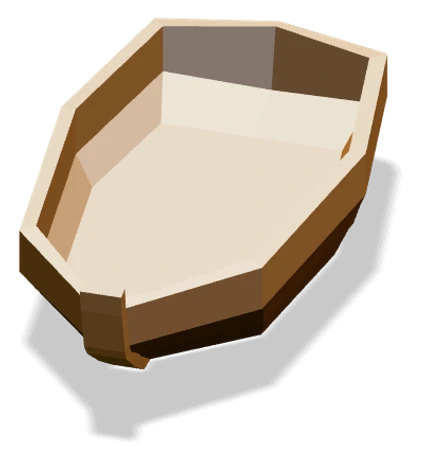
Where there is safe water and an adult who is responsible for it, the day also has swimming in it, and fishing, and building rafts out of plastic drums and lashed poles — with the same knots you learned for the table. The rule is always the same and it is not up for discussion: nobody goes into the water alone, you go in pairs, and someone stands on the bank and counts heads.
Your first camp starts with an ordinary Saturday
Nobody goes off to camp straight away. You come to the Saturday meetings first, you get to know your patrol, and then you go with people who have become your friends in the meantime.
How to join →